
Can You Reheat Salmon Without Ruining It? Yes, you can reheat salmon without ruining it, but the method matters. Cooked salmon is delicate: too much heat can dry the flesh, harden the edges and make the smell stronger. The safest and best-quality approach is to refrigerate leftovers promptly, use them within 48 hours and reheat them only once until steaming hot throughout.
For most fillets, the oven gives the best result because it warms the fish gently. An air fryer is faster and works well for fishcakes, patties and pastry-covered salmon. A skillet can restore crisp edges, while the stovetop is ideal when salmon is mixed with pasta, vegetables or sauce. The microwave is convenient, but it is also the easiest method to get wrong.
This guide explains how to reheat salmon in the oven, air fryer, skillet, stovetop and microwave. It also covers salmon and rice, salmon pasta, salmon en croute, salmon Wellington, salmon patties and salmon fishcakes.
Before Reheating: Was the Salmon Stored Safely?
Reheating cannot make poorly stored salmon safe. Once the original meal is finished, cool the salmon and put it in the fridge within two hours. Store it in a clean, covered container and eat or freeze it within 48 hours.
A large piece of salmon cools more slowly than a small portion. Divide a whole side or several fillets into smaller servings before refrigeration. This also allows you to reheat only what you intend to eat.
You can reheat cooked salmon when:
- It was fully cooked the first time.
- It was refrigerated within two hours.
- It has remained properly chilled.
- It is no more than 48 hours old.
- It has not already been reheated.
- You will heat it until steaming hot throughout.
Discard salmon if it was left on the table for several hours, kept beyond the recommended period or stored under uncertain conditions. A sour or ammonia-like smell, slimy surface or unusual discolouration also means it should not be eaten. However, a normal smell does not prove that food was stored safely.
Can You Reheat Salmon the Next Day?
Yes, you can reheat salmon the next day if it was cooled and refrigerated promptly. Next-day salmon is often easier to reheat without drying it because it has spent less time in the fridge.
Take out only the portion you need and keep the rest chilled. You can also eat properly stored cooked salmon cold the next day in a salad, sandwich or wrap.
Can You Reheat Salmon Twice?
No. You should only reheat salmon once.
The safe pattern is:
Cook → cool promptly → refrigerate → reheat once → eat immediately
Do not cool an already reheated portion and save it for another meal. Repeated temperature changes give bacteria more opportunities to grow and make it difficult to track how long the food has been outside the fridge.
Turning the fish, stirring a dish or returning it to the appliance immediately because the centre is still cool does not count as reheating twice. That is simply completing one continuous reheating process.
The Oven Method (Best Overall)
The oven is the best overall option for reheating a plain salmon fillet, steak or larger portion. Its gentle, surrounding heat gives the centre time to warm before the outer flakes become dry.
How to reheat salmon in the oven
- Preheat the oven to around 150°C to 160°C.
- Put the salmon in a small ovenproof dish.
- Add a teaspoon of water, stock, lemon juice, olive oil or melted butter.
- Cover the dish loosely with foil.
- Heat for around 10 to 15 minutes.
- Check the thickest part.
- Continue heating if necessary until steaming hot throughout.
- Serve immediately.
A thin tail piece may take less time, while a thick fillet or large portion may take longer. Treat the timings as a guide and check the fish itself.

Covering the salmon holds in moisture. If you want the surface slightly firmer, remove the foil for the final few minutes.
For skin-on salmon, place it skin-side down. The oven may not return the skin to its original crispness, but a brief finish in a skillet can improve it.
The Air Fryer Method (Quickest and Easiest)
The air fryer is a quick, low-effort option. It is especially good for salmon patties, fishcakes, breaded pieces, salmon en croute slices and individual salmon Wellington portions.
Because hot air circulates strongly, a plain fillet may dry out if the temperature is too high.
How to use an air fryer
- Preheat to around 150°C to 160°C if your appliance requires it.
- Brush the salmon lightly with oil or add a few drops of water or lemon juice.
- Arrange it in one layer without overcrowding.
- Heat for three to five minutes.
- Turn or check the portion.
- Continue in short intervals until steaming hot in the centre.
For delicate fish, use an air-fryer-safe dish or a loose foil parcel with a little moisture. Follow the appliance instructions and avoid completely blocking airflow.
Use moderate heat for glazed salmon because sugary marinades can burn before the middle is hot.
The Skillet Method (Best for Edges)
A skillet works well when you want to revive browned edges or crisp the skin. It is best for firm fillets and salmon steaks that can be turned without falling apart.
How to reheat salmon in a skillet
- Place a non-stick skillet over low to medium-low heat.
- Add a small amount of oil or butter.
- Put the salmon in the pan, skin-side down where applicable.
- Add a teaspoon of water beside the fish.
- Cover with a lid.
- Heat gently for two to four minutes.
- Turn carefully if needed.
- Continue until the centre is steaming hot.
The direct heat improves the underside while the lid traps steam around the flesh. Use a wide spatula, turn the fish as little as possible and never press it into the pan. Pressing squeezes out moisture and breaks the flakes.
On the Stovetop (Fast & Crispy)
The stovetop is most useful when the salmon has already been flaked or will be combined with another dish. It gives you more control than reheating a whole mixed meal in the microwave.
Warm the sauce, vegetables, pasta or potatoes first. Reduce the heat, add the cooked salmon near the end and fold it through gently. Cover the pan briefly and continue heating until the entire dish is steaming hot.
Adding salmon near the end prevents it from spending too long over direct heat.
For lightly crisp flaked edges, spread the salmon in a thin layer in a lightly oiled pan. Leave it undisturbed briefly, then turn it carefully. This works well in a potato hash or fried grain dish.
If the salmon is in a cream, tomato, coconut or butter sauce, heat the sauce gently before adding the fish. Avoid prolonged boiling because it can toughen the salmon and split delicate sauces.
The Microwave Method (Quickest, but Use Caution)
Yes, you can reheat salmon in the microwave. It is the quickest method, but high power can make the outer flesh rubbery while leaving the thickest part cool.
How to reheat salmon in the microwave
- Place the salmon in a microwave-safe dish.
- Add a teaspoon of water, stock, sauce or lemon juice.
- Cover loosely with a microwave-safe lid or plate.
- Use medium or reduced power where possible.
- Heat for about 30 seconds.
- Turn or rearrange the salmon.
- Continue in 20- to 30-second intervals.
- Check the thickest part after each interval.
- Stop when the salmon is steaming hot throughout.
- Allow any recommended standing time, then serve.
Do not place a thick fillet in the microwave at full power for several minutes without checking it. Short intervals give you a better chance of keeping the salmon moist.
Covering the dish reduces splashes and helps retain steam. Lift the cover away from your face because trapped steam can cause burns.
Why You Should Avoid the Microwave
The microwave is not unsafe when used properly, but it is usually the weakest method for texture.
First, it heats unevenly. Thin edges may become extremely hot before the centre has warmed. Turning the salmon, using lower power and allowing standing time can help, but the oven provides more even heat.
Second, it removes moisture quickly. Salmon that is already fully cooked can become dry in less than a minute if reheated aggressively.
Third, microwaving often strengthens the smell of cooked fish. This can be unpleasant in an office, classroom or shared kitchen.
Finally, the microwave cannot restore crisp skin, breadcrumbs or pastry. Salmon fishcakes, patties, en croute and Wellington are normally better in an oven or air fryer.
Use the microwave when speed matters, but use it carefully rather than simply giving the fish one long blast.
Can You Reheat Salmon?
Yes, you can reheat salmon safely when it has been stored correctly and reheated thoroughly. If you are asking can you reheat salmon, the key considerations are how long it has been refrigerated, how it was stored, and whether it has already been reheated.
Cooked salmon leftovers should be refrigerated promptly and used within a safe storage period. If you are wondering can you reheat salmon the next day, this is generally possible when the salmon has been refrigerated properly and has not been left at room temperature for an extended period.
Avoid repeatedly reheating the same portion. If you are asking can you reheat salmon twice, it is safer to reheat only the amount you plan to eat rather than repeatedly heating and cooling the leftovers.
Can You Reheat Salmon and Rice?
Yes, can you reheat salmon and rice safely? You can, provided both components have been stored correctly. Rice requires particular care because cooked rice can support the growth of Bacillus cereus if it is cooled and stored incorrectly.
Where possible, separate the salmon and rice before reheating. Place the rice in a microwave-safe dish, add a small amount of water, cover it, and heat until steaming hot throughout. Salmon can be warmed gently in the oven, skillet, or microwave.
If the components cannot be separated, cover the meal and reheat it in stages. Stir the rice where appropriate and check both the centre of the rice and the thickest part of the salmon before eating.
Do not reheat salmon and rice if the meal has been left out for several hours, stored beyond the recommended period, or previously reheated.
Can You Reheat Salmon Pasta?
Yes, can you reheat salmon pasta safely? In most cases, yes, provided it has been cooled and refrigerated promptly and is still within its recommended storage period.
For creamy salmon pasta, use a saucepan over low heat. Add a small splash of milk, cream, or water and stir gently as it warms. Avoid boiling the sauce aggressively, as this can cause it to split and may make the salmon dry.
Tomato-based salmon pasta can also be reheated on the stovetop. If the sauce has thickened in the refrigerator, add a little water and stir until the dish is heated evenly.
Can You Reheat Salmon Pasta in the Microwave?
Yes, can you reheat salmon pasta in the microwave? Transfer the pasta to a microwave-safe bowl, add a little suitable liquid, and cover it loosely. Heat in short intervals, stirring between each interval to distribute the heat.
Deep bowls of pasta can develop cold spots in the centre. Check the pasta, sauce, and salmon carefully before serving, making sure the whole dish is thoroughly hot.
Can You Reheat Salmon en Croute?
Yes, can you reheat salmon en croute? The oven is generally the best choice because it can warm the filling while helping the pastry remain crisp.
Preheat the oven to a moderate temperature, place the portion on a baking tray, and cover it loosely with foil during the early part of reheating. Remove the foil towards the end to allow the pastry to crisp.
Individual portions usually reheat more evenly than a whole salmon en croute. Check the salmon filling rather than judging doneness from the pastry alone, as the outside can become hot and browned while the centre remains cool.
A microwave is less suitable because it can leave the pastry soft and damp.
Can You Reheat Salmon Wellington?
Yes, can you reheat salmon Wellington? An oven or air fryer is usually the best option.
For the oven, place an individual portion on a baking tray and cover it loosely with foil while it warms. Remove the foil during the final few minutes to help refresh the pastry.
An air fryer can also work well when used at a moderate temperature. Check the Wellington regularly because puff pastry can brown quickly. The salmon filling should be thoroughly hot before serving.
Individual slices generally reheat more evenly than a whole Wellington. Avoid reheating the same portion more than once.
Can You Reheat Salmon Patties?
Yes, can you reheat salmon patties? Their relatively flat shape makes them convenient to reheat, and an air fryer can help restore a crisp exterior.
Arrange the patties in a single layer and heat them at a moderate temperature, turning if necessary. A skillet is another good option; use a small amount of oil and warm the patties over medium-low heat.
For larger quantities, an oven can provide more consistent heating. A microwave can also be used when convenience is the priority, although the outside may become softer.
Always check the centre of the patty before eating. A browned or crispy surface does not necessarily mean the filling is hot throughout.
Can You Reheat Salmon Fishcakes?
Yes, can you reheat salmon fishcakes? Oven and air-fryer methods are particularly useful because they can warm the centre while keeping the coating relatively crisp.
In an oven, place the fishcakes on a baking tray and heat at a moderate temperature, turning them if needed. In an air fryer, use moderate heat and check them regularly, as the outer coating can brown before the centre is fully hot.
The potato-and-salmon filling can remain cooler than the breadcrumb coating, particularly with thick fishcakes. Check the centre carefully before serving.
Whether you are asking can you reheat salmon in the oven, can you reheat salmon in the microwave, or can you reheat salmon the next day, safe storage and thorough reheating are the most important considerations.
Mistakes to Avoid When Reheating Salmon
Leaving it out too long
Put cooked salmon in the fridge within two hours. Do not save fish that sat on the table all evening.
Reheating it twice
Only reheat one portion at a time and eat it immediately.
Using very high heat
High temperatures dry the outside before the middle warms. Gentle heat gives a better result.
Forgetting moisture
A teaspoon of water, stock, lemon juice, oil or sauce can stop the fish becoming dry.
Reheating it uncovered
A loose cover traps some steam in the oven or microwave.
Trusting a fixed time
Fillet thickness, appliance power and portion size vary. Check the actual food.
Ignoring the thickest part
The surface may be hot while the centre remains cool.
Overhandling the fish
Repeated turning and stirring can cause salmon to disintegrate. Handle it gently.
Forgetting the other ingredients
Rice, pasta, cream sauces and pastry all affect storage and reheating. The whole dish must be safe and hot.
Try It Cold
You do not always need to reheat leftover salmon. Properly cooked salmon that was refrigerated within two hours can be eaten cold within 48 hours.
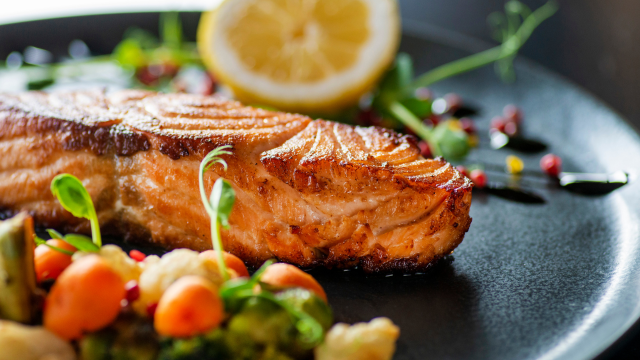
Cold salmon often stays softer and moister than reheated fish. It works well in:
- Salads
- Sandwiches
- Wraps
- Bagels
- Pasta salads
- Couscous
- Potato salads
- Grain bowls
Keep it refrigerated until you are ready to eat. Do not leave a cold salmon lunch in a warm bag or on a desk for several hours.
For a cold salmon-and-rice bowl, remember that the rice should be used within 24 hours.
Pro-Tip: Skip Reheating Altogether!
Rather than trying to recreate a freshly cooked fillet, turn the salmon into a new cold meal.
Flake it into a salad with lemon and herbs, mix it with yoghurt or mayonnaise for a sandwich, or add it to a wrap with cucumber and leaves. You can also serve it on a bagel with soft cheese or fold it through chilled pasta.
Skipping reheating avoids dryness, uneven microwave heating and strong fish smells in shared kitchens. The salmon must still have been refrigerated promptly and consumed within 48 hours.
Understanding safe storage and temperature control is useful both at home and in food-related workplaces. Tyne Academy offers accessible learning across practical and professional subjects, including knowledge that can support safer food-handling practices.
Which Reheating Method Should You Choose?
| Salmon dish | Best method |
| Plain fillet | Oven |
| Skin-on fillet | Skillet or air fryer |
| Flaked salmon | Stovetop |
| Salmon pasta | Stovetop or microwave |
| Salmon and rice | Microwave, ideally separated |
| Salmon en croute | Oven |
| Salmon Wellington | Oven or air fryer |
| Salmon patties | Air fryer or skillet |
| Salmon fishcakes | Oven or air fryer |
| Delicate poached salmon | Low oven or serve cold |
Final Thoughts
You can reheat salmon without ruining it when you use gentle heat and start with properly stored leftovers.
The oven is the best overall option for a fillet. An air fryer is quick and effective for crisp dishes, while a skillet restores browned edges. Use the stovetop for flaked salmon, pasta and sauces. The microwave is suitable when time is short, but lower power, added moisture and short intervals are essential.
Refrigerate cooked salmon within two hours, use it within 48 hours and reheat it only once until steaming hot throughout. When salmon is served with rice, follow the stricter 24-hour rice rule.
Cold salmon is also a good option and often preserves the texture better than reheating. Whichever method you choose, never try to rescue fish that was left out for hours or stored under uncertain conditions.