
Understanding PIES in health and social care provides a practical way to look at a person’s overall development and wellbeing rather than concentrating only on illness or physical care.
Quick Overview
PIES provides a straightforward way to understand how different aspects of a person’s development, wellbeing and everyday life are connected.
This guide covers:
✅ The meaning of PIES in health and social care
✅ What Physical, Intellectual, Emotional and Social development involve
✅ How the four areas can influence one another
✅ How PIES can be used in care planning and support
✅ Examples of PIES across different stages of life
PIES in health and social care stands for Physical, Intellectual, Emotional and Social development. These four areas are connected throughout life. A change in physical health can affect confidence and relationships. Memory difficulties may influence independence. Emotional distress can reduce participation in everyday activities, while supportive relationships may help someone cope with illness or major change.
For learners asking what is PIES in health and social care, the simplest answer is that it is a framework for considering these four aspects of a person’s life together. Questions such as what are PIES in health and social care or what is PIES health and social care are essentially asking how this framework helps us understand the whole person.
The PIES model is particularly useful when learning about human development, person-centred care and holistic wellbeing. It is not, however, a diagnostic test or substitute for formal professional assessment.
What Is PIES in Health and Social Care?
PIES in health and social care is an acronym for Physical, Intellectual, Emotional and Social development.
The framework is widely used in health and social care education to explore how people develop across different life stages and how health conditions, relationships and life experiences can affect them.
Its value comes from encouraging a broader view.
Someone who experiences a serious fall may obviously need physical support. However, the same person may become afraid of walking, lose confidence, stop attending social activities and need help understanding new equipment.
Looking only at the injury would provide an incomplete picture.
What Does PIES Stand For?
If you are wondering what does PIES stand for, the four areas can be summarised simply:
| Component | Meaning | Focus |
| Physical | Physical development | Health, mobility, physical abilities |
| Intellectual | Intellectual development | Learning, thinking, knowledge |
| Emotional | Emotional development | Feelings, confidence, wellbeing |
| Social | Social development | Relationships, communication, interaction |
The PIES meaning is therefore not simply four definitions to memorise. The meaning of PIES becomes clearer when we consider how these areas influence one another.
What Is the PIES Model?
The PIES model in health and social care is a framework for understanding different aspects of a person’s development and wellbeing.
It encourages professionals and learners to look beyond medical needs and consider wider factors that may affect independence, confidence, communication, relationships and quality of life.
For example, someone with arthritis may need mobility support, but pain could also reduce social activity and make the person feel less confident about leaving home.
PIES in health and social care can help identify those wider effects.
It should still be used alongside appropriate professional judgement, recognised assessments and formal care-planning processes.
Understanding the Four Areas of PIES
PIES in health and social care is an acronym for Physical, Intellectual, Emotional and Social development.
Physical Development
Physical development concerns the body, health and physical abilities.
In health and social care, this can include health conditions, mobility, nutrition, strength, coordination, sensory abilities and physical independence.
Physical development changes throughout life. Children develop movement and motor skills. Adolescence involves puberty and rapid bodily changes. Adults may experience illness, injury or disability, while later life can bring changes in mobility or strength.
Good care considers what a person can do as well as what support they require.
Someone who needs help using stairs may still be able to dress themselves, prepare food or manage many other parts of daily life.
Supporting those abilities can protect both independence and confidence.
Intellectual Development
Intellectual development concerns learning, memory, thinking and the ability to understand information.
It can involve:
- learning and acquiring knowledge;
- memory and concentration;
- cognitive skills;
- decision-making;
- reasoning; and
- problem-solving.
Intellectual development continues throughout life.
In care settings, intellectual needs often affect communication. Someone experiencing memory difficulties may need information repeated or divided into smaller steps. Another person may need easy-read information or additional support to understand choices.
Needing assistance does not automatically mean someone is unable to participate in decisions.
Professionals should adapt communication to maximise understanding wherever possible.
Emotional Development
Emotional development includes feelings, self-esteem, confidence, identity and the ability to cope with challenges.
Changes in health can have a significant emotional effect.
Moving into residential care may create anxiety about losing independence. A long-term diagnosis may cause uncertainty. Someone recovering from an accident may become less confident about tasks they once performed easily.
Emotional support can involve listening, reassurance, maintaining familiar routines and offering meaningful choices.
Where emotional difficulties indicate a possible mental health condition or substantial distress, appropriate professional support may be required.
Social Development
Social development concerns relationships, communication, participation and support networks.
This can include family, friendships, community connections and other meaningful relationships.
Social wellbeing is personal.
One individual may enjoy busy group activities. Another may prefer quiet time but value a weekly visit from a close friend.
Good care should support relationships and activities that matter to the person rather than assuming everyone needs the same type of social interaction.
Why Is PIES Important in Health and Social Care?
PIES in health and social care is important because health and wellbeing rarely fit into a single category.
A diagnosis may explain a physical condition, but it does not necessarily explain how the individual feels, what they understand or how the condition affects their relationships.
Supporting Person-Centred Care
PIES in health and social care aligns well with person-centred care.
The Care Quality Commission expects providers to promote independence, choice and control and to involve people in decisions about their own care. CQC also emphasises maintaining important relationships and supporting people to live in ways that reflect their personal goals.
CQC guidance on independence, choice and control
Skills for Care similarly promotes approaches that put people, families and communities at the centre of care and encourage workers to understand what genuinely matters to each individual.
Skills for Care guidance on person-centred approaches
The PIES framework complements this philosophy because it encourages workers to consider several dimensions of a person’s life rather than reducing them to a diagnosis.
PIES in health and social care itself is not a mandatory CQC assessment method.
Understanding Individual Needs
Two people with the same health condition can need very different support.
Consider two adults with arthritis.
One lives with family, regularly meets friends and feels confident using mobility equipment.
The other lives alone, worries about falling and has stopped attending social activities.
Their physical condition may be similar, but their emotional and social circumstances differ substantially.
Care should therefore respond to the individual rather than the diagnosis alone.
Improving Care Planning and Outcomes
PIES in health and social care information can help professionals think about more personalised goals.
These might include maintaining physical independence, understanding medication, improving confidence or continuing an important social activity.
Formal care planning must still follow appropriate professional procedures, but PIES in health and social care can help workers identify areas that might otherwise be overlooked.
Promoting Holistic Wellbeing
Holistic care considers the whole person.
Instead of asking only whether somebody can walk safely, a care worker might consider whether fear of falling has reduced confidence or whether limited mobility prevents the individual from seeing friends.
This connects practical care with everyday quality of life.
How Is the PIES Model Used in Health and Social Care?
PIES in health and social care is an acronym for Physical, Intellectual, Emotional and Social development.
Assessing a Person’s Physical, Intellectual, Emotional and Social Needs
Professionals can gather information through observation, communication, recognised assessments, personal history and appropriate feedback from relatives or carers.
Different sources may reveal different needs.
A physiotherapist may identify changes in mobility. A care worker may notice that someone has become withdrawn. The individual may explain that they are worried about losing independence.
The person’s own views should remain central wherever possible.
Consent, confidentiality, mental capacity and appropriate information-sharing requirements must also be respected.
Creating Individualised Care Plans
PIES in health and social care can help professionals turn a broad assessment into meaningful personal goals.
A care plan might support somebody to continue dressing independently, understand information more easily or remain connected with family.
Person-centred planning should not ask only, “What does this person need us to do?”
It should also ask, “What do they want to continue doing for themselves?”
Reviewing Changes in Health and Wellbeing
Care needs change.
Someone recovering after surgery may become stronger and more confident. Another person’s health may deteriorate, while bereavement or changing family circumstances may alter emotional and social needs.
Regular review allows support strategies to change rather than being based permanently on an old assessment.
Working With Families and Other Professionals
Care frequently involves several professionals.
Nurses, carers, social workers, doctors, occupational therapists, physiotherapists, relatives and advocates may all contribute relevant information.
Good multidisciplinary working helps bring these perspectives together while keeping the individual’s wishes, privacy and rights at the centre.
PIES in Health and Social Care Examples
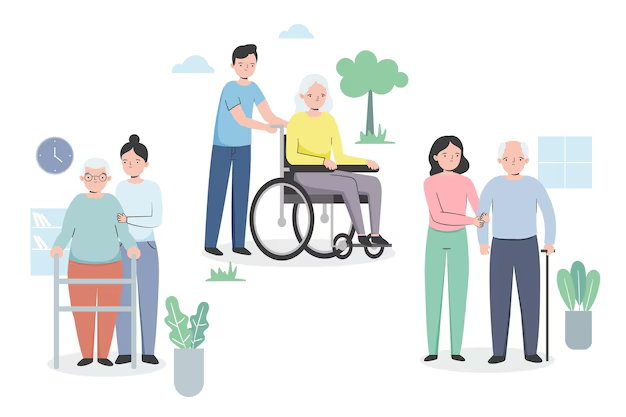
Example: Applying the PIES Model to an Individual Receiving Care
Imagine Peter, aged 80, is moving into residential care after several falls at home.
He uses a walking frame, takes regular medication and enjoys reading, gardening and speaking with his sister. Peter worries that entering residential care means losing control over his routine.
His circumstances might be considered like this:
Physical: Peter may need support with mobility, medication, nutrition and reducing the risk of further falls.
Intellectual: Reading, discussing current affairs and receiving clear information about care options may help maintain mental stimulation and understanding.
Emotional: Peter may require reassurance and genuine opportunities to make choices so that his confidence is not unnecessarily reduced.
Social: Maintaining contact with his sister and finding suitable ways to continue gardening or related activities may support social wellbeing.
The physical risk is obvious, but preventing falls should not automatically mean doing everything for Peter.
If staff take over every task, his independence and confidence could decline.
A more person-centred approach would identify what Peter can continue doing safely and provide assistance only where it is genuinely needed.
This example shows why PIES health and social care learning focuses on connections between needs rather than four isolated categories.
PIES Across Different Life Stages
PIES in Childhood and Adolescence
PIES development takes place throughout life.
During childhood, physical growth happens alongside learning, language development, emotional regulation and early relationships.
PIES in adolescence can involve particularly noticeable changes.
Physically, puberty occurs. Intellectual development may involve more complex and abstract thinking. Emotional development can include changing identity, confidence and self-esteem. Socially, peer relationships and growing independence often become more significant.
The phrase PIES adolescence therefore refers to examining physical, intellectual, emotional and social development together during the teenage years.
Development varies between individuals, so these descriptions should not become rigid expectations.
PIES in Adulthood and Older Age
Adults continue developing through work, relationships, learning and major life events.
Later adulthood may involve retirement, bereavement or changing health, but ageing should not automatically be treated as decline.
Many older adults remain intellectually active, socially connected and emotionally resilient.
Health and social care should therefore respond to individual strengths and needs instead of stereotypes based on age.
Limitations of the PIES Model
PIES Is a Framework, Not a Diagnostic Tool
PIES in health and social care cannot diagnose dementia, depression, a learning disability or a medical condition.
If someone develops memory problems, for example, the intellectual part of PIES may highlight an area of concern, but it cannot explain the cause.
Professional assessment may be needed.
PIES in health and social care should therefore complement recognised assessment methods rather than replace them.
Individual Experiences Are Different
Development and wellbeing are influenced by health, disability, culture, relationships, environment, education and life experience.
Two people of the same age may have very different abilities, preferences and support needs.
The PIES model should encourage professionals to ask better questions rather than place people into fixed categories.
How Does PIES Compare With Other Wellbeing Frameworks?
PIES vs SPICE Model
PIES and SPICE share similarities because both encourage professionals to consider more than physical health.
PIES in health and social care focuses on:
- Physical
- Intellectual
- Emotional
- Social
SPICE expands this approach by including:
- Social
- Physical
- Intellectual
- Cultural
- Emotional
The additional Cultural element highlights how beliefs, values, identity and background can influence a person’s experiences and care needs.
Culture should still be considered when using PIES in health and social care; SPICE simply gives it a separate named category.
Neither framework replaces professional assessment. They are ways of encouraging holistic thinking.
PIES vs Maslow’s Hierarchy of Needs
Maslow’s hierarchy focuses primarily on human motivation and categories of need, commonly including physiological needs, safety, belonging, esteem and self-actualisation.
PIES in health and social care focuses instead on areas of development and wellbeing.
The frameworks are therefore different, although both encourage consideration of the wider person rather than one immediate issue.
Frequently Asked Questions About PIES in Health and Social Care
What does PIES stand for in health and social care?
PIES stands for Physical, Intellectual, Emotional and Social development.
These four areas provide a simple framework for considering different aspects of human development and wellbeing.
Why is PIES important in care?
PIES encourages holistic thinking.
It helps professionals consider how someone’s physical condition may interact with understanding, emotions, independence and relationships.
This can contribute to more individualised support.
What are examples of PIES in health and social care?
Physical examples include mobility and nutrition. Intellectual examples include memory, learning and decision-making. Emotional examples include confidence and coping with change. Social examples include relationships and community participation.
In practice, these areas frequently overlap.
How does PIES support person-centred care?
PIES encourages workers to consider an individual’s abilities, understanding, feelings, preferences, goals and relationships rather than focusing only on a diagnosis.
This complements principles such as choice, independence and involvement in decisions.
What are the five characteristics of intellectual development?
There is no universal rule within PIES stating that intellectual development always contains exactly five characteristics.
Five common examples are learning, memory, reasoning, problem-solving and decision-making.
Language, concentration and creativity may also be relevant.
What are the PIES for different life stages?
The categories remain Physical, Intellectual, Emotional and Social throughout life.
Childhood often involves rapid physical growth, learning and relationship development. PIES in adolescence can include puberty, increasingly complex thinking, identity development and changing peer relationships.
Adulthood and later life bring further development through work, relationships, health and major life experiences.
Conclusion
Understanding what is PIES in health and social care provides a straightforward framework for looking at the whole person rather than one condition or care task.
The meaning of PIES is Physical, Intellectual, Emotional and Social development. Each area offers a different perspective on wellbeing, but the model becomes most useful when the links between them are recognised.
A physical problem may affect confidence and social participation. Intellectual needs can influence communication and decision-making. Emotional wellbeing can affect independence, while strong relationships can help someone cope with change.
The PIES model in health and social care therefore supports broader thinking about person-centred and holistic care. It is also useful for understanding PIES development across childhood, PIES adolescence, adulthood and older age.
Its limitations should remain clear. PIES in health and social care is not a clinical diagnosis, statutory assessment or substitute for professional judgement. Formal care decisions require appropriate assessment methods and meaningful involvement of the individual.
High Paying Skills currently has health and social care-related courses listed through UK course marketplaces, including adult care and person-centred-care subjects. Learners should check the exact course provider, syllabus, assessment and certificate status before enrolling, particularly if they need a regulated qualification or evidence of occupational competence.
Used appropriately, PIES in health and social care reinforces an important principle: effective care should consider the person’s health, understanding, emotions, relationships, strengths and choices together.