

Can you reheat rice safely the next day? In many cases, yes—but rice requires greater caution than most meat, vegetable and sauce-based dishes.
Food takeaway portions are often large enough to leave spring rolls, noodles, curry, chicken dishes or rice for another meal. These leftovers can usually be reheated when they were refrigerated promptly, stored for an appropriate period and have not already been reheated.
Takeaway rice is different because its preparation history may be unclear. A restaurant may have cooked the rice earlier, cooled it and reheated it before serving. Heating it again at home could therefore become a second reheating cycle.
For homemade rice, safe handling is more straightforward: cool it quickly, refrigerate it within one hour where possible, keep it for no longer than 24 hours and reheat it once until steaming hot throughout.
Can You Reheat Rice?
Yes, rice can be reheated safely when it has been cooled, stored correctly, and has not already been reheated. This includes reheating rice in the microwave, provided that proper food-safety practices are followed.
The same guidance applies to different types of rice, including plain rice, basmati, jasmine, pilau, egg fried rice, Chinese takeaway rice, and rice prepared as part of meal prep. Regardless of the variety, safe storage and reheating are essential. Food safety authorities generally advise following a strict “cool, store, reheat once” approach when deciding can you reheat rice in the microwave nicely or using any other method.
Rice should not be reheated if it has been left out overnight, kept at room temperature for an extended period, stored for too long, or reheated previously. A simple approach is to cool it quickly, refrigerate it promptly, reheat it only once, and eat it soon after reheating.
Whether you are reheating rice on the stovetop or using a microwave for convenience, make sure it is hot throughout before eating. When rice has not been stored safely, it is better to discard it than risk eating it.
Why Reheated Rice Can Cause Food Poisoning
Uncooked rice may contain spores of Bacillus cereus. These spores can survive ordinary cooking.
If cooked rice remains warm for an extended period, the spores may develop into bacteria and produce toxins. Reheating may destroy many live bacteria, but it may not reliably remove toxins that have already formed.
This means reheating temperature is not the only consideration. Rice that has spent too long at room temperature should be discarded rather than heated more aggressively.
To store homemade rice safely:
- remove it from the hot pan or rice cooker promptly;
- divide it into shallow portions;
- cool it as quickly as possible, ideally within one hour;
- cover and refrigerate it;
- use it within 24 hours;
- reheat it only once;
- ensure it is steaming hot throughout.
Do not leave cooked rice cooling in a deep saucepan for several hours. The centre may remain warm even when the surface feels cool.
What Is Bacillus cereus?
Bacillus cereus is a type of bacteria that can be present in foods such as rice. It can produce spores, which are protective structures that may survive normal cooking conditions.
This is why cooked rice still needs to be handled carefully after boiling or steaming. Cooking can reduce many bacteria, but it does not necessarily remove all spores. The way rice is cooled and stored is therefore important when asking can you reheat rice safely.
Freshly cooked rice is generally safe to eat when handled properly. However, if it is left at room temperature for too long, bacteria can multiply and may produce toxins. Some of these toxins can be resistant to heat, meaning that reheating may not make the rice safe again. This is also important when considering can you reheat rice in the microwave, as microwave heating cannot correct unsafe storage.
For this reason, prompt cooling, proper refrigeration, and good food hygiene are essential when storing cooked rice. If stored correctly, can you reheat rice the next day? Yes, provided it has been cooled quickly, refrigerated promptly, and has not already been reheated.
Why Does Bacillus cereus Matter When Reheating Rice?
Bacillus cereus is particularly relevant to rice because cooked rice is often prepared in large quantities and may take time to cool. This can happen in homes, takeaways, restaurants, buffets, and during meal preparation.
Large quantities of rice can remain warm for longer than expected, creating conditions where bacteria may multiply. Leaving rice in a rice cooker or at room temperature for an extended period can therefore increase the risk. This is why people often ask can you reheat rice in a rice cooker. The answer depends on how the rice has been stored and whether it has remained at a safe temperature.
It is also important to avoid repeated reheating. If you are wondering can you reheat rice twice or can you reheat rice more than once, it is safest to reheat only the portion you intend to eat and avoid reheating the same rice repeatedly.
The same principles apply when asking can you reheat rice from the Chinese takeaway. Chinese takeaway rice can be reheated if it has been handled and stored safely, but rice that has been left out for too long should be discarded.
Importantly, contaminated rice may not look, smell, or taste unusual. You cannot reliably judge its safety by appearance alone, so proper time and temperature control are more important.
Is It Safe to Reheat Cooked Rice?
Yes, cooked rice can be reheated safely when it has been cooled promptly, stored correctly in the refrigerator, and has not already been reheated. Whether you are asking can you reheat rice in an air fryer, can you reheat rice in the oven, or using a microwave or stovetop, the rice should be thoroughly hot throughout before eating.
Rice that has been left out for several hours or stored at room temperature overnight should not be reheated and eaten. Heating the rice again cannot necessarily reverse unsafe storage or remove toxins that may already have formed.
Other rice-based foods can also require careful handling. For example, can you reheat rice noodles? In many cases, yes, provided they have been stored correctly and are reheated thoroughly. The same general food-safety principles apply regardless of the reheating method.
Extra care is also needed with rice dishes containing ingredients such as egg, chicken, prawns, beef, pork, or vegetables. The entire dish should be reheated thoroughly before serving, while following safe storage and handling practices throughout.
Reheating in the Microwave
The microwave is convenient for curries, sauces, vegetables, rice and noodles, but it can heat food unevenly.
Transfer the food to a microwave-safe dish unless the takeaway container is clearly marked for microwave reheating. Cover it loosely with a suitable lid to retain steam.
Heat the meal in short stages. Stop halfway through and stir thoroughly, moving food from the cooler centre towards the hotter outside edges.
Allow the food to stand for the time recommended by the microwave or product instructions. Stir again and check several places before eating.
Dense meat pieces, prawns and folded noodles may remain cool even when the sauce is bubbling. The complete dish should be steaming hot throughout. FSA guidance specifically recommends stirring microwave-heated leftovers because their edges may become hot while the centre remains cold.
3 Essential Safety Rules
Rice safety comes down to three simple principles: cool it quickly, keep it cold, and reheat it only once. These rules are important whether you are asking can you reheat rice, can you reheat rice in the microwave, or can you reheat rice the next day.
Cool It Quickly
Do not leave cooked rice sitting out for hours after a meal. If you plan to keep it for later, cool it as quickly as practical and refrigerate it promptly. This is especially important when considering can you reheat rice the next day, as safe storage starts immediately after cooking.
The same principle applies to rice from a takeaway. If you are wondering can you reheat rice from the Chinese, make sure the rice has been handled and refrigerated properly rather than being left at room temperature for an extended period.
Keep It Cold
Once cooled, store rice in the refrigerator rather than leaving it on the worktop. Proper refrigeration helps reduce the opportunity for bacteria such as Bacillus cereus to multiply.
This applies whether you plan to reheat rice in the microwave, reheat rice in the oven, reheat rice in a rice cooker, or use an air fryer. The reheating method does not make up for unsafe storage.
Reheat Only Once
It is best to reheat only the amount of rice you intend to eat. If you are asking can you reheat rice twice or can you reheat rice more than once, the safest approach is to avoid repeatedly reheating the same portion.
When reheating, make sure the rice is thoroughly hot throughout before eating. You can reheat rice in an air fryer or use another suitable method, depending on the type of dish.
The same care applies to other rice-based foods. If you are wondering can you reheat rice noodles, they should also have been stored correctly and reheated thoroughly before serving.
Can You Reheat Rice in the Box?
Paper or cardboard takeaway boxes should not automatically be microwaved. They may contain metal handles, plastic linings, coatings or adhesives that are unsuitable for heating.
Move the food to an approved dish unless the packaging carries clear reheating instructions.
Reheating on the Hob or Stovetop
The hob is one of the most reliable answers to can you reheat rice, particularly when the meal contains sauce.
Place the food in a saucepan, wok or frying pan. Add a small amount of water, stock or sauce if it appears dry.
Use low-to-medium heat and stir frequently. Scrape the base of the pan so that the sauce does not burn while the centre remains cool.
For noodles or fried rice, break up clumps and toss the food repeatedly. Covering the pan briefly can help trapped steam reach the centre.
The hob works well for:
- beef and broccoli;
- chicken in black bean sauce;
- chow mein;
- curries;
- fried rice with a known safe history;
- saucy prawn dishes.
Continue until the food is steaming throughout rather than merely warm.
Reheating in the Oven
The oven is suitable for larger portions and foods that need to remain crisp.
Preheat it to approximately 160°C–180°C. Place the food in an oven-safe dish and cover saucy or moist meals with foil.
Spring rolls, ribs and battered chicken can normally remain uncovered or be uncovered near the end to restore their texture.
Turn individual pieces during heating and check the centre of thick meat or filled foods.
People asking, Can you reheat rice in the microwave should remember that the oven setting is not the internal food temperature. The centre should still become steaming hot or reach approximately 75°C when measured with a clean food thermometer.
The Best Methods for Different Dishes
For Fried or Battered Items
Spring rolls, sweet-and-sour chicken balls, battered prawns and salt-and-pepper ribs usually lose their crispness in the microwave.
An air fryer or oven generally gives a better result.
For an air fryer, begin around 170°C–180°C and heat for approximately four to eight minutes. Arrange the pieces in one layer and turn or shake them halfway through.
Sauce should be reheated separately on the hob or in a microwave where possible. Pouring sauce over battered food before reheating can make the coating soggy.
For Rice and Noodles
Rice with a known safe preparation history can be reheated on the hob or in a microwave.
Add a small amount of water, break up clumps and stir frequently. Reheat until every part is steaming hot.
Noodles can be reheated in a wok or skillet. Add a splash of water or sauce and toss them over medium heat.
Do not reheat rice simply because it smells normal. Food containing harmful bacteria or toxins may not show a noticeable change in smell or appearance.
For Saucy Entrees
Beef and broccoli, chicken curry, black bean dishes and sweet-and-sour sauce reheat well on the hob.
Use moderate heat and stir frequently so that meat, vegetables and sauce reach an even temperature.
A microwave is also suitable for smaller portions, provided the food is stirred during heating and checked in the centre.
For Steamed Dishes
Dumplings and bao buns are usually best reheated in a steamer.
Place them in a steamer basket above simmering water, cover and heat until the filling is steaming hot. Leave enough space between individual pieces for steam to circulate.
A covered frying pan with a small amount of water can be used when a steamer is unavailable.
Should You Use an Air Fryer to Reheat Chinese Food?
Yes, can you reheat Chinese food in an air fryer is answered positively for many dry, baked or fried dishes.
Air fryers are effective for:
- spring rolls;
- salt-and-pepper chicken;
- chicken balls;
- ribs;
- crispy duck;
- chips;
- wontons;
- battered prawns.
Use approximately 160°C–180°C as a starting range and avoid overcrowding the basket.
An air fryer is less suitable for liquid-heavy curry, soup, loose sauce or very moist rice unless the appliance permits an appropriate heat-resistant container.
Dishes That Reheat Well and Those That Do Not
Great for Reheating
Saucy meat and vegetable dishes generally reheat well because moisture protects them from drying.
Good options include:
- beef and broccoli;
- chicken in black bean sauce;
- sweet-and-sour sauce;
- cooked noodles;
- vegetable stir-fries;
- dumplings;
- spring rolls;
- cooked pork or chicken dishes.
Not Ideal for Reheating
Some dishes lose quality or create greater safety concerns.
Takeaway rice with an uncertain reheating history is the clearest example. Very delicate battered foods may become soggy, while overcooked prawns can turn rubbery.
Cold dishes containing raw ingredients, fresh garnish or salad may not be suitable for heating. Remove lettuce, cucumber and other cold components before reheating a mixed meal.
Can You Reheat Rice with Prawns?
Yes, can you reheat rice with prawn safely? Properly cooked prawns can be reheated once when they were refrigerated promptly and remain within the safe leftover period.
Use the hob or microwave for prawns in sauce. Stir frequently and ensure that every prawn becomes hot.
Avoid prolonged cooking because prawns can become tough, but do not stop while the centre remains lukewarm.
If the prawns have already been reheated, were left out for too long or have an uncertain history, discard them.
Food Safety Golden Rules
Refrigerate Promptly
Place takeaway leftovers in the fridge within approximately two hours.
Do not leave the boxes on the table while watching television and then refrigerate them late at night. Divide large amounts into shallow containers so they cool more efficiently.
The fridge should operate between approximately 0°C and 5°C.
Handle Rice Carefully
Homemade cooked rice should be cooled rapidly, preferably within one hour, refrigerated for no longer than 24 hours and reheated only once.
With takeaway rice, consider whether the business may already have reheated it. When you cannot establish its history, do not reheat it.
Reheat Thoroughly
Reheat food until it is steaming hot throughout.
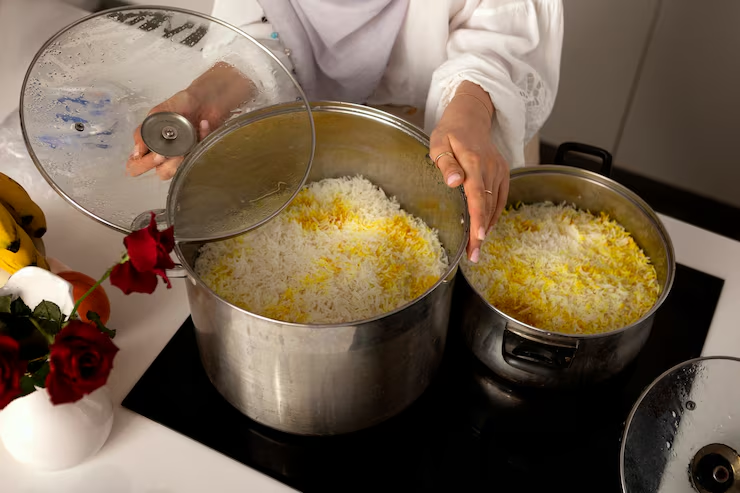
When using a clean food thermometer, approximately 75°C at the centre is a useful practical target. Check several places in dense or irregular dishes.
One Reheat Only
The answer to can you reheat food twice and can you reheat cooked food twice is generally no under UK household guidance.
This also means can you reheat Chinese food twice should be answered no. Reheat only the portion you intend to eat and leave the rest cold in the fridge.
How Long Can You Keep Chinese Food in the Fridge?

Ordinary Chinese takeaway leftovers should generally be eaten within two days, provided that they were refrigerated promptly.
Therefore, can you reheat rice food the next day? Yes, when it was stored correctly and has not already been reheated.
Can you reheat rice 2 days later? Potentially, if it is still within the two-day period and its storage has been consistently safe. However, rice should be treated more strictly and used within 24 hours.
The clock starts when the food was originally cooked or supplied, not when you remembered to place it in another container.
What to Avoid When Reheating Chinese Food
Do not:
- reheat food more than once;
- leave takeaway food unrefrigerated overnight;
- reheat rice when its preparation history is unknown;
- use unsuitable plastic, polystyrene or cardboard packaging;
- overcrowd an air-fryer basket;
- warm food only until lukewarm;
- mix a fresh cold portion with food that has already been reheated;
- use smell alone as the safety test.
Do not add freshly cooked rice to old takeaway rice and assume the full dish now has a new storage period. The oldest or most vulnerable ingredient determines the safe approach.
Signs Your Leftover Food Should Be Binned
Discard the food when:
- it was left at room temperature for several hours or overnight;
- it is beyond the recommended storage period;
- its storage or reheating history is uncertain;
- it has already been reheated;
- the packaging has leaked, swollen or become damaged;
- it has visible mould, unusual discolouration or an abnormal odour.
Some dangerous food contamination causes no obvious smell or appearance. The absence of visible spoilage does not overrule unsafe storage history.
Frequently Asked Questions
Can you reheat rice the next day?
Yes, if it was cooled quickly, stored in the fridge and has not already been reheated.
Can you reheat rice in the microwave?
Yes. Add a splash of water, cover loosely, stir halfway through and heat until steaming hot throughout.
Can you reheat rice twice?
No. Rice should not be reheated twice.
Can you reheat rice more than once?
No. Reheat rice only once and eat it straight away.
Can you reheat rice in a rice cooker?
Some rice cookers have a reheat or steam setting. Add a little water and heat until steaming hot throughout. Do not use a rice cooker to keep leftover rice warm for hours.
Can you reheat rice in an air fryer?
Yes, but it is not ideal. Use an air fryer-safe dish, add water and cover with foil. Do not put loose rice in the basket.
Can you reheat rice in the oven?
Yes, but it is better for larger portions or rice-based dishes. Add moisture, cover the dish and heat until steaming hot throughout.
Can you reheat rice noodles?
Yes. Reheat rice noodles gently on the hob or in the microwave with a little moisture. Do not overheat them because they can become sticky or mushy.
Can you reheat rice from the Chinese takeaway?
Yes, but only if it was refrigerated promptly and has not already been reheated. If storage is uncertain, throw it away.
What is the biggest mistake when reheating rice?
The biggest mistake is leaving cooked rice at room temperature for too long before storing it. Safe reheating starts with safe cooling and storage.
Final Thoughts on Reheating Chinese Food
You can reheat rice safely, but proper handling before reheating is essential. Safe cooling, storage, and reheating practices all play an important role when considering whether you can reheat rice successfully in everyday cooking.
Key Safety Principles
- Cool cooked rice as quickly as possible.
- Refrigerate it promptly after cooling.
- Reheat rice only once.
- Make sure it is steaming hot all the way through before eating.
- Avoid eating rice that has been left out overnight or stored in the fridge for too long.
Different reheating methods can work well depending on the type of rice and the result you want:
- Microwave: Quick and convenient for most portions.
- Stovetop: Useful when you want to improve texture with a little moisture.
- Steaming: A good choice for plain rice.
- Stir-frying: Ideal for fried rice.
- Oven, air fryer, or rice cooker: Possible in certain situations, although these methods may not be the most practical for every type of rice.
From a food hygiene and hospitality perspective, rice is a useful example of how safe storage is just as important as the cooking process. Tyne Academy provides practical learning that helps learners develop safer kitchen habits for both home and workplace environments.


